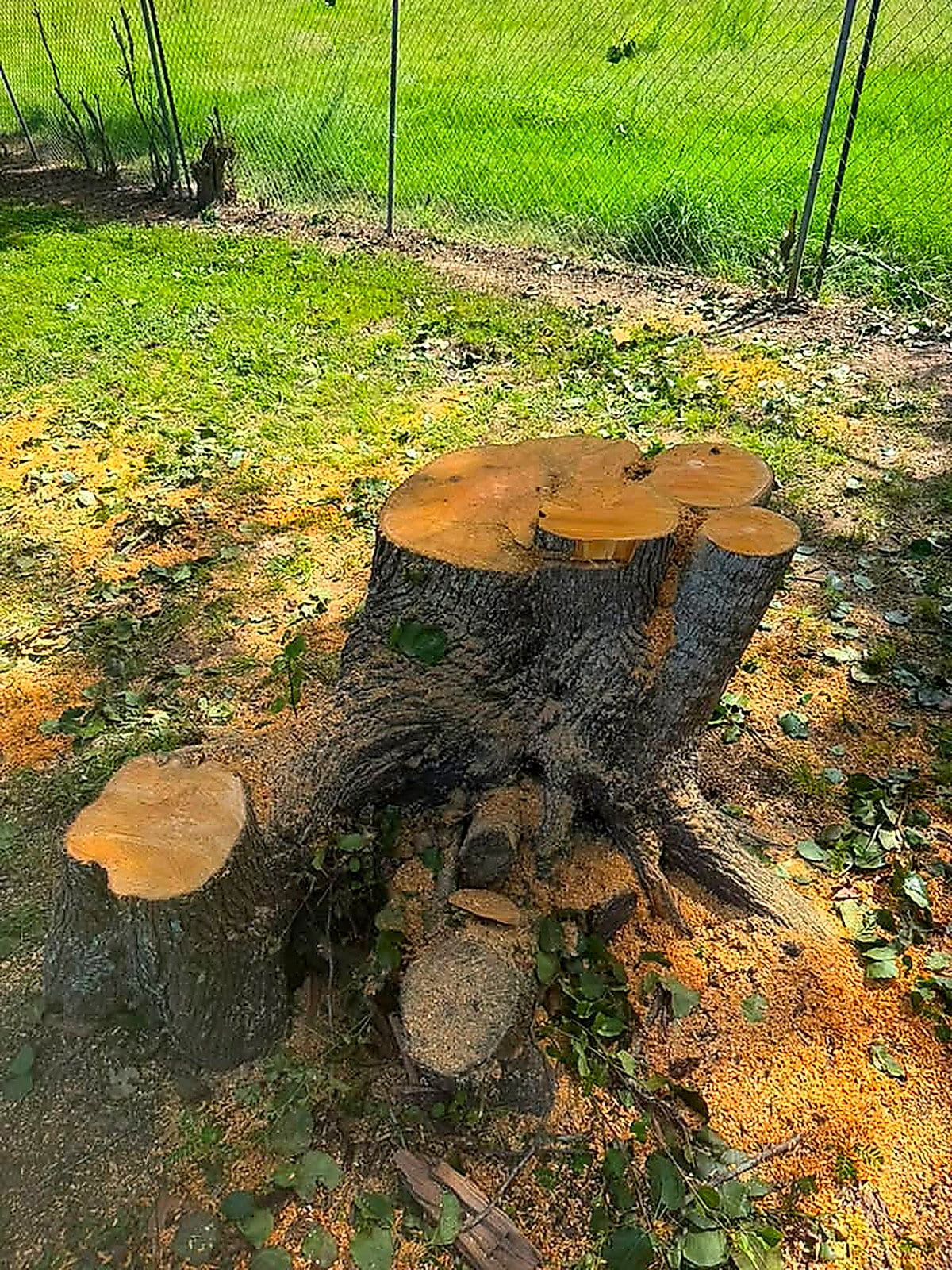
It settles
A root ball buried under fill rots away over years, and the ground on top of it drops. Under a slab or a drive, that is expensive.

Ground down below grade or pulled out whole, so the spot goes back to being yard and there is nothing left to mow around.
Pulling takes the root ball out whole with the excavator. It leaves a hole that has to be filled and packed, and it costs more — but there is nothing left underground to rot out and take your slab or your driveway down with it in ten years.
Grinding cuts the stump down below grade and leaves the roots in the ground. It is quicker, it is cheaper, and it is the right answer in a finished yard where you want to throw grass seed over it and be done.
The rule is simple. If something is going to be built on that spot, pull it. If it is yard, grind it. He does both, so he has no reason to sell you the wrong one.
This one was hard against the wall, which is exactly the kind that gets left for years.
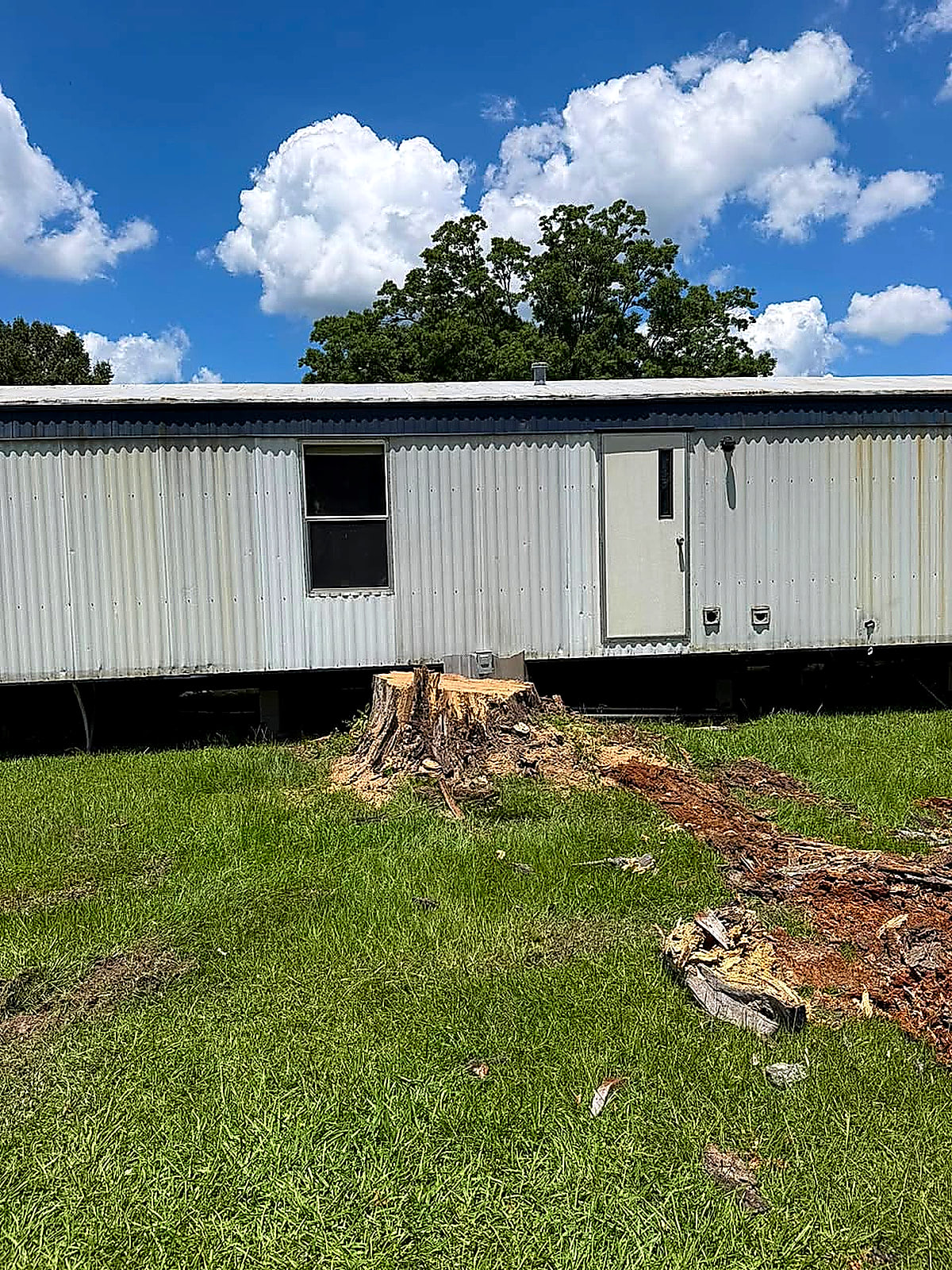
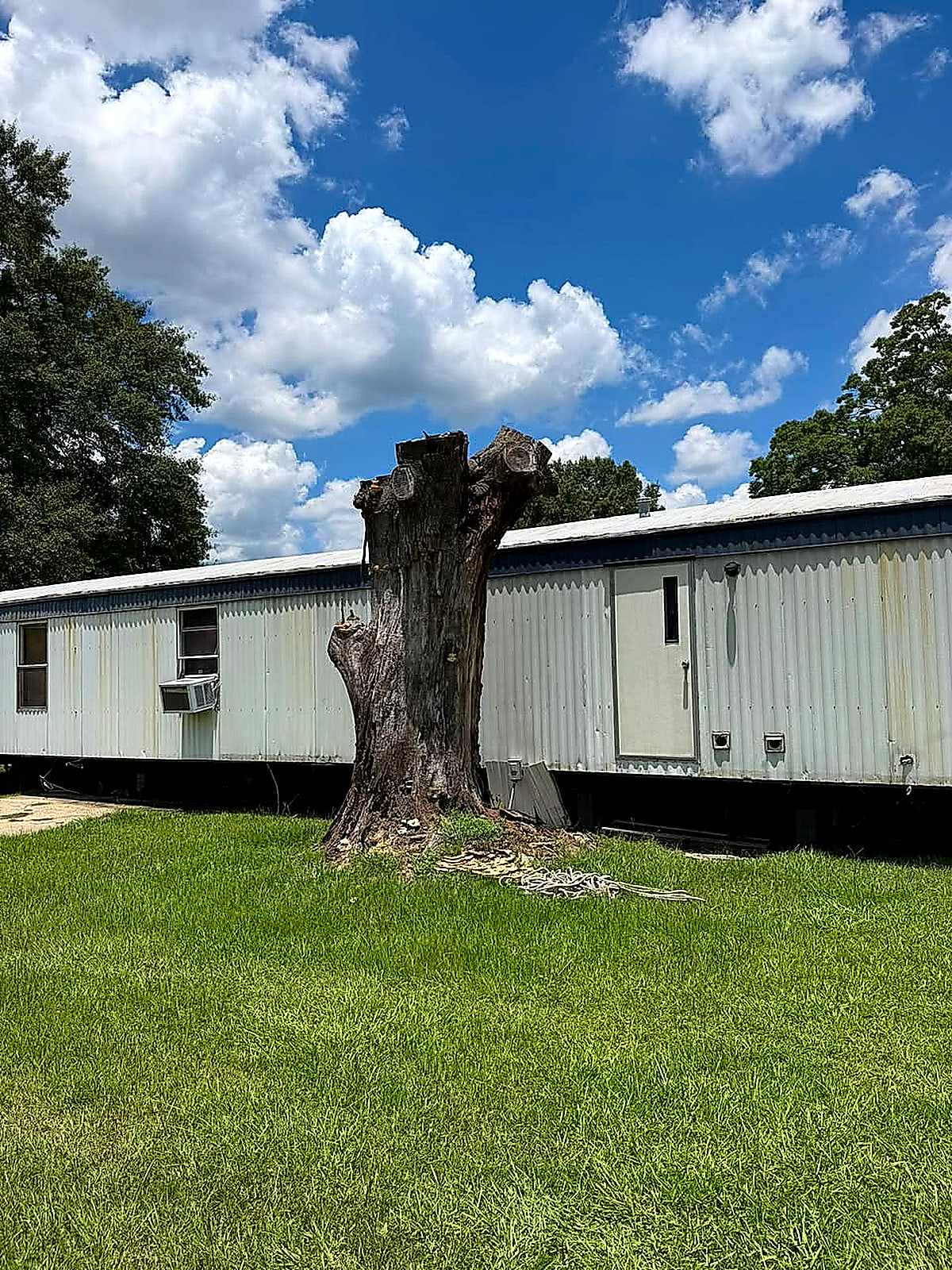
A root ball buried under fill rots away over years, and the ground on top of it drops. Under a slab or a drive, that is expensive.
Some species send shoots up off a cut stump for years. Out of the ground, it does not.
Nobody wants to find a root ball with a post hole digger, a trencher or a footing.
Grinding, mostly yes — the mess is chips and it stays where the stump was. Pulling a big root ball out of an established lawn will damage the ground around it. There is no version of that which does not.
It gets filled and packed. A pulled root-ball hole that is just pushed full of loose dirt will sink on you.
He can, or they can stay on site. It changes the price either way, so it gets agreed before he starts.
Yes. Plenty of them are old stumps left behind by whoever took the tree.
It depends on how big around it is, what species, and whether the machine can get to it. Send him a photo with something in it for scale, or he will come look. The look is free.
Call or text 601-554-6517 and tell him how many stumps and roughly how big.